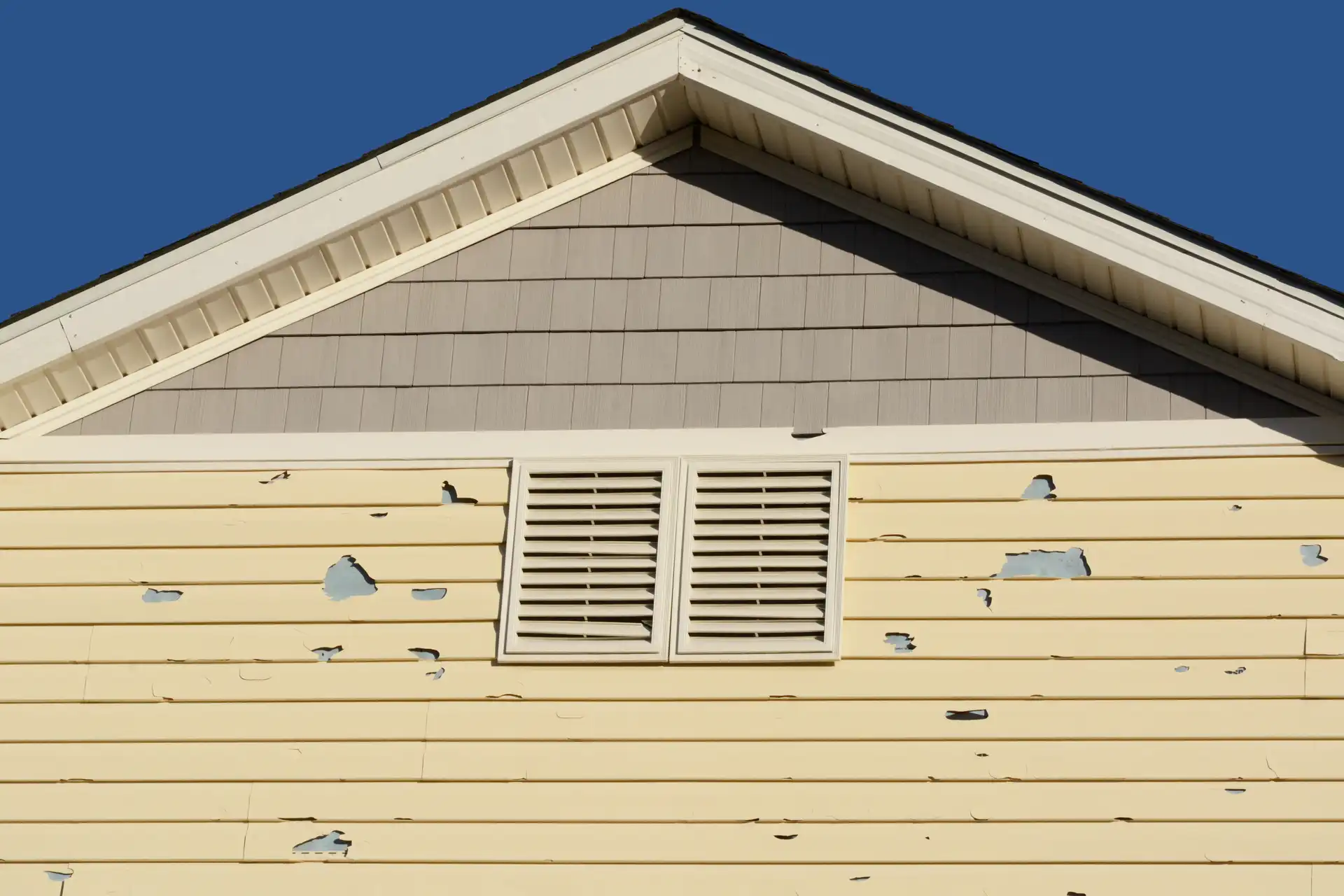
Can You Replace Just One Section of House Siding?
Homeowners often ask us, can you replace just one section of siding instead of redoing the entire exterior? In many cases, the answer is yes. At Richmond Exteriors, we regularly evaluate isolated siding damage caused by storms, impact, moisture, or age and determine whether a targeted repair will restore proper protection. The key is making sure the surrounding siding is still in good condition and that the replacement section can be matched closely enough to avoid an obvious patchwork appearance.
For Indianapolis homeowners, this question often comes up after a hailstorm, strong wind event, or accidental impact damages only one side or a small area of the house. A focused repair may save money and extend the life of the existing siding, but there are also situations where full replacement makes more sense.
When a Partial Siding Replacement Makes Sense
Replacing one section of siding can be a practical solution when the damage is clearly isolated. Maybe a tree limb struck one wall during a storm, a grill melted a few vinyl panels, or hail damaged only the side of the house that faced the weather.
A partial replacement may work well when:
- The surrounding siding is still structurally sound
- Damage is limited to a relatively small area
- The underlying wall has not suffered widespread moisture damage
- Matching replacement material is still available
- The existing siding has plenty of useful life remaining
At Richmond Exteriors, we begin with an inspection rather than assuming replacement is necessary. If a repair will restore the siding properly, there is no reason to replace more material than your home needs.
Matching Existing Siding Can Be the Biggest Challenge
The technical repair is often easier than matching the appearance.
Siding colors can fade over years of exposure to sunlight and weather. Even if the manufacturer still produces the same original color, a new panel may look noticeably brighter than the siding already on your house.
Texture and profile can create another challenge. Manufacturers update product lines, discontinue colors, and change panel designs over time. If your siding was installed many years ago, finding an exact match may be difficult.
We take material matching seriously because a siding repair should look as natural as possible. Richmond Exteriors specifically offers siding repair for cracks, warping, loose panels, and weather-related damage and carefully matches materials when performing repairs.
Storm Damage Often Affects One Elevation More Than Another
Indianapolis weather is one reason partial siding replacement comes up so frequently. Wind-driven hail or debris can strike one side of a home much harder than the others.
For example, the west or south-facing elevation may show dents, cracks, or loose panels while the remaining walls look untouched. In that situation, replacing siding on only the affected elevation may be worth considering.
Central Indiana weather also includes substantial rainfall, winter snow, freezing temperatures, and seasonal temperature swings. National Weather Service climate data for Indianapolis shows average annual precipitation of more than 43 inches and measurable winter snowfall, along with average freezing conditions from roughly late October into April. Those conditions can gradually expose weak points in siding that has already been compromised by a storm.
What We Check Before Recommending a Repair
Visible siding damage is only part of the story. Before replacing a section, we want to know what is happening underneath it.
We inspect for moisture intrusion, damaged sheathing, rot, loose fasteners, and problems with the house wrap or weather barrier. If water has been getting behind the siding for an extended period, simply replacing a few panels may hide a larger problem rather than solve it.
We also look at the overall age and condition of the exterior. If one section failed because of an unusual impact, repair may be straightforward. If panels are cracking, warping, fading, or loosening all around the house, isolated replacement may only postpone a larger project.
Older Indianapolis Homes Can Require Extra Attention
Indianapolis has a particularly broad mix of housing ages and architectural styles. The city developed extensively as a community of detached single-family homes, and many established neighborhoods contain homes that have undergone multiple exterior updates over the decades.
That matters when repairing siding.
Homes in areas such as Irvington, Meridian-Kessler, the Old Northside, and other established neighborhoods may have exterior materials that are no longer manufactured or siding that was installed during an earlier renovation. Indianapolis also has numerous historic and conservation districts where exterior appearance can carry additional importance.
On those properties, we pay close attention to color, profile, trim, and architectural details when determining whether a partial siding replacement will produce a satisfactory result.
When Full Siding Replacement Makes More Sense
There is a point where repairing individual sections stops being the economical choice.
Whole-home replacement may be worth considering when siding has widespread cracking, warping, rot, moisture damage, or significant fading. Repeated repairs in different areas can also indicate the siding is simply reaching the end of its useful life.
Full replacement gives homeowners the opportunity to address underlying issues while creating a consistent exterior. It can also be a good time to improve insulation, reduce ongoing maintenance, and update the home's appearance.
Richmond Exteriors installs both vinyl and fiber cement siding for Greater Indianapolis homeowners and backs siding installation with manufacturer warranty protection plus our five-year workmanship warranty.
Repairing One Entire Wall Can Be a Good Middle Ground
Sometimes replacing just a few panels will look too obvious, but replacing all of the siding is unnecessary. In that situation, replacing one full elevation can offer a useful compromise.
For example, if hail heavily damaged the north side of your house but the other three sides remain in excellent condition, replacing that entire wall may create a more uniform appearance than patching scattered panels.
This approach can also make material matching easier because trim or corners naturally provide visual breaks between elevations. We evaluate these details during the inspection and explain the tradeoffs before recommending a solution.
Does Partial Replacement Affect Protection?
A properly completed siding repair should restore the weather-resistant function of the damaged area. That means more than attaching a new panel.
The replacement must integrate correctly with adjacent siding, flashing, trim, and moisture-management components. Poor installation can create gaps or pathways for water to get behind the exterior.
That is why siding repair is worth treating as professional exterior work rather than a cosmetic patch. The goal is to leave the wall protected as well as attractive.
How Do You Know Which Option Is Right?
Start by looking at three factors: the extent of the damage, the condition of the remaining siding, and whether a compatible replacement material is available.
A newer exterior with one damaged area is often a strong candidate for partial replacement. An older exterior with repeated failures, extensive fading, or underlying moisture issues may be telling you it is time to think bigger.
We prefer to inspect the property and give homeowners clear options rather than assume every siding problem requires a complete replacement.
Find Out Whether Your Siding Can Be Repaired
One damaged section does not automatically mean your entire home needs new siding. At Richmond Exteriors, we evaluate the affected area, inspect the surrounding materials, and determine whether repair, one-wall replacement, or a full siding upgrade provides the best long-term value.
Schedule a siding assessment with our Indianapolis team and get a clear answer about how much of your exterior actually needs to be replaced.