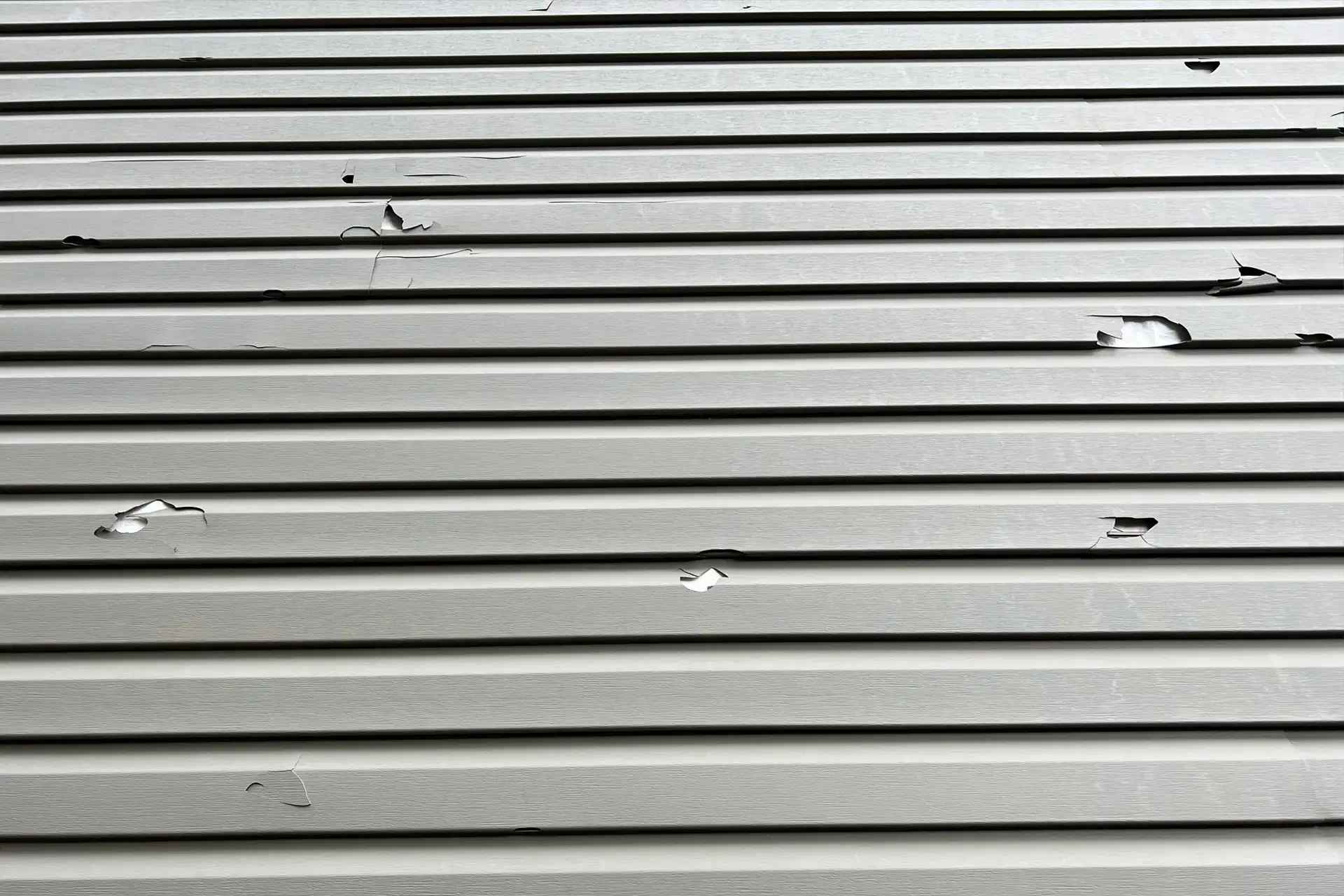
What Is House Wrap and Why Does It Matter When Replacing Siding?
Replacing siding involves more than choosing a new color or material. What sits behind the siding matters just as much, and house wrap under siding plays a major role in helping protect your home from moisture and air infiltration. At Richmond Exteriors, we look beyond the visible panels to make sure the wall system underneath is doing its job. For Indianapolis homeowners, that added protection is especially important because exterior walls have to handle heavy rain, humid summers, freezing winters, and repeated temperature swings throughout the year.
What Is House Wrap?
House wrap is a weather-resistant barrier installed over exterior wall sheathing and beneath the siding. Its main purpose is to help keep water from reaching the structural components of the wall while still allowing water vapor to escape.
That distinction matters. Siding is designed to shed most rain, but it is not completely waterproof. Wind-driven rain can sometimes get behind panels through seams, joints, corners, and penetrations around windows or doors. House wrap provides a second layer of defense, helping direct that moisture away from the wall assembly before it can cause damage.
Why Siding Alone Is Not Enough
It is easy to think of siding as the only barrier protecting your exterior walls, but a modern wall system relies on multiple layers working together.
Siding handles the first line of exposure. House wrap sits behind it as a drainage and weather-resistive layer. Flashing around windows, doors, and other openings helps direct water away from vulnerable areas. Together, these components help protect the sheathing, insulation, and framing.
If any of those layers are missing, damaged, or installed incorrectly, water can find its way into places where it does not belong. That can lead to rot, mold, insulation problems, and costly structural repairs over time.
House Wrap Helps Manage Indianapolis Rain
Central Indiana receives substantial rainfall throughout the year, and strong thunderstorms can bring wind-driven rain that hits exterior walls from different angles. That matters for homes across Indianapolis, from established neighborhoods like Irvington and Meridian-Kessler to newer developments in Franklin Township, Pike Township, and the outer suburbs.
During siding replacement, removing the old material gives us a rare opportunity to inspect the wall underneath. We can see whether the existing weather barrier is intact, missing, torn, or improperly installed.
For older Indianapolis homes that have gone through multiple exterior renovations, the condition behind the siding can vary significantly. Some properties may have outdated building paper, damaged wrap, or areas where previous work left gaps around openings.
House Wrap Can Help Reduce Air Leakage
Moisture control is the biggest reason house wrap matters, but air control is another important benefit.
When properly installed and sealed, house wrap can help reduce unwanted air movement through gaps in the exterior wall system. That does not make it a substitute for insulation, but it can help support a more complete thermal envelope.
For Indianapolis homeowners dealing with hot, humid summers and cold winter air, reducing uncontrolled drafts can contribute to more consistent indoor comfort. It can also help your heating and cooling systems work more efficiently when combined with proper insulation, windows, doors, and air sealing.
What Happens If House Wrap Is Damaged?
Damaged house wrap can create weak points where water or air can reach the wall assembly more easily. Tears, holes, loose sections, missing tape, or poorly sealed seams may all reduce performance.
Problems often develop around areas where the exterior has been altered. Window replacements, added vents, utility penetrations, and previous siding repairs can all disturb the weather barrier.
During a siding project, we inspect these areas carefully. If the existing wrap is compromised, repairing or replacing it before new siding goes on is usually far easier than discovering the problem after everything is finished.
Flashing and House Wrap Need to Work Together
House wrap is only effective when it integrates correctly with flashing.
Windows and doors are especially important because they create openings in the wall system. Flashing around these areas should be layered so water naturally drains outward instead of becoming trapped behind the siding.
The same principle applies around roof-to-wall intersections, utility penetrations, exterior fixtures, and other transitions. We pay attention to these details because water intrusion often starts at joints and openings rather than in the middle of a siding panel.
Does Every Siding Replacement Need New House Wrap?
Not necessarily. In some cases, the existing weather barrier may still be in excellent condition and properly installed. In others, replacement or repair may be the smarter choice.
The answer depends on the age of the home, the type of existing barrier, its condition, and what we find once the old siding is removed.
That is why we do not treat siding replacement as a purely cosmetic project. We want to understand the condition of the entire exterior wall system before covering it with new material.
Older Indianapolis Homes Deserve a Closer Look
Indianapolis has a wide range of housing stock, including homes built many decades ago in neighborhoods such as Irvington, Broad Ripple, Butler-Tarkington, and the Old Northside. Older properties may have wall assemblies that differ significantly from newer construction.
Some were built before modern house wrap products became common. Others may have undergone partial renovations that created inconsistent moisture barriers across different parts of the home.
When we replace siding on an older property, we pay close attention to what is underneath. The goal is not simply to make the exterior look newer. It is to improve protection in a way that respects the home’s existing construction and corrects problems where practical.
House Wrap Matters With Vinyl and Fiber Cement Siding
Both vinyl and fiber cement siding benefit from a properly installed weather-resistant barrier.
Vinyl siding is designed with movement in mind and includes small gaps that allow expansion and contraction. Water can occasionally get behind the panels, which makes the drainage layer underneath especially important.
Fiber cement siding is highly durable, but it is still part of a layered wall system. Proper house wrap and flashing help manage moisture behind the cladding and protect the structure beneath it.
At Richmond Exteriors, we install high-quality siding systems with attention to both the visible finish and the underlying components that help support long-term performance.
What Should Homeowners Ask During a Siding Project?
Before your project starts, it is worth asking what will happen once the old siding comes off.
Will the sheathing be inspected? Will damaged house wrap be repaired or replaced? How will windows and doors be flashed? What happens if moisture damage is discovered?
These questions can reveal a lot about how thoroughly the contractor approaches the job. A siding project should not simply cover up existing problems. It should be an opportunity to identify and correct them.
Protect More Than Your Home’s Appearance
New siding can transform curb appeal, but the best siding project also improves the way your exterior wall system protects the home. House wrap is a hidden component, yet it plays an important role in managing moisture, reducing air leakage, and helping the materials behind your siding stay dry.
At Richmond Exteriors, we look at the full wall assembly before installing new siding. Schedule a siding evaluation with our Indianapolis team and get a clear picture of what your home needs beneath the surface, not just what looks best from the street.